


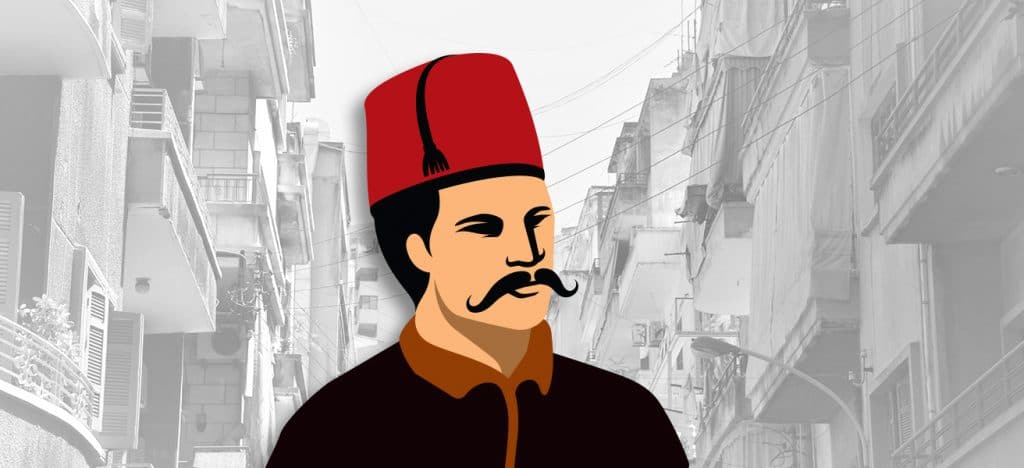
Back in the day, the streets of Beirut’s neighborhoods were often watched over and protected by men known as “Qabadayat”, which roughly translates as valiant men. They often helped people in their community and resolved local disputes. Qabadayat were pillars of tradition and social customs. They often played important roles in organizing celebrations and funerals in their districts. In this episode, Dareen tells us about these storied men of yesteryear.
1
الله محيي القباضيات. أنا دارين. كل بلد عندو قصص وحكايا كتيرة. كل مدينة، عندا ذاكرة شعبية مليانة روايات وذكريات، عن زمن كانت الحياة فيه مليانة خير، وكانت الناس كِلّا غير.
“God bless the Qabadayat. I am Dareen. Every country has lots of stories, and every city has a popular folk memory full of stories of a time when life was filled with goodness and people were completely different.
2
وبيروت وحدة من هالمدن، اللي عاشت محطات تاريخية، كانو أبطالا رجال منسمِّيُن “قبضايات بيروت”. وكلمة قبضايات جايي من قبضاي، وهوي تعبير بيستخدمو كتير من الشعوب العربية، ومعناتا، الرجل الشجاع والقوي. والقبضايات هوي جمع لكلمة قبضاي، ومعناتا مجموعة من الرجال، اللي عندهن قوة وسلطة على مجتمعُن، وفيكن تسمُّوُن زعما الأحياء البيروتية.
Beirut is one of those cities which lived historic times, its heroes were men we call “Qabadayat Beirut” (valiant men of Beirut). The word Qabadayat comes from the word “Qabaday” (valiant man), and it is a term used in many Arab societies. It means the man who is brave and strong. Qabadayat is the plural of Qabaday. It means a group of men who have power and control over their society, and you can call them the leaders of Beirut neighborhoods.