


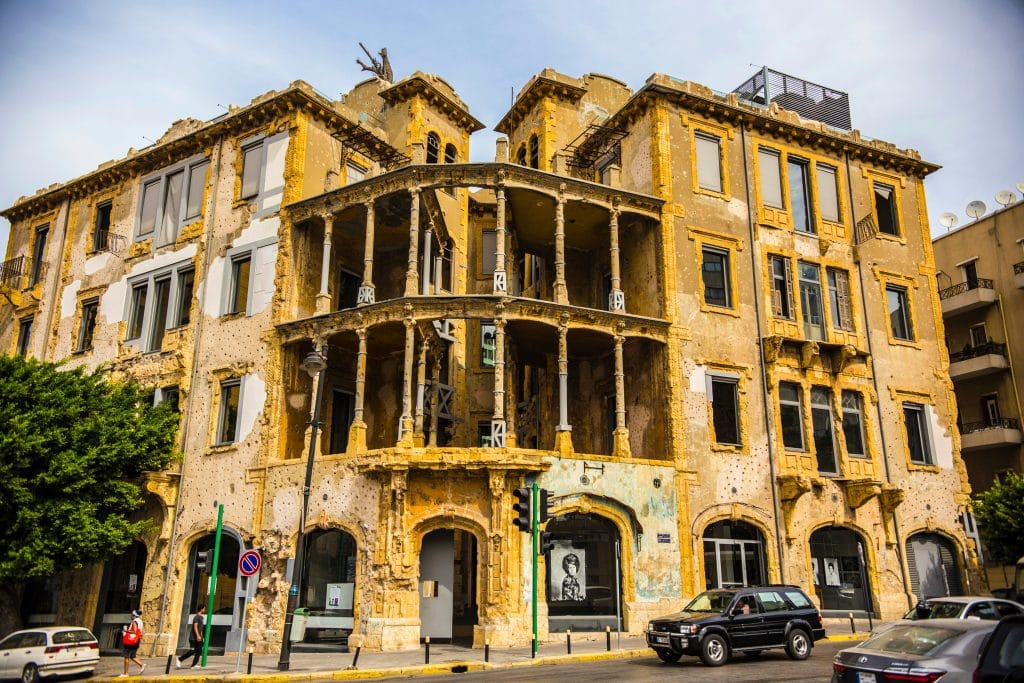
In the heart of Beirut along one of its most important avenues is a yellow building that was situated on a major front line of Lebanon’s 15-year civil war that ended in 1990. The families that lived in the building fled when the war broke out and warring factions fought to control the building due to its strategic location. When the war ended, the building was scarred by bullets and shellfire and strewn with belongings of its original inhabitants and the fighters who commandeered it. Today the building is a public space intended to serve as a community center and a place to commemorate all that was lost during the war. In this episode, Naim tells us about the history of this iconic and important Beirut landmark.
1
أهلا وسهلا فيكن بحلقة جديدة من لانغويج وايف. أنا نعيم، واليوم حنرجع بالزمن لذكرى من إيام الحرب الأهلية. عادة بس نجيب سيرة الحرب الأهلية بلبنان، منقول تنذكر وما تنعاد، يعني تضل ذكرى وما نرجع نعيش متلا مرة تانية.
Welcome to a new episode of Language Wave. I am Naim, and today we will go back in time to a memory from the days of the civil war. Usually, when we mention the civil war in Lebanon, we say: may it be remembered and never reoccur, which means, may it remain a memory and that we never relive something like it another time.
2
حلقتنا حتكون عن شاهد عهالحرب، وهو البيت الأصفر. هيك إسمو لأن الحجار والصخور يلي معمر منا لونا أصفر. وهو مبنى قديم عمرو حوالي 100 سنة، موجود ببيروت. حنحكي عن تاريخ هالبيت يلي مرق ب 3 مراحل قبل الحرب، وبعدا، وخلالا.
Our episode will be about a witness to this war, which is the Yellow House. Its name is so, because the stones and rocks from which it is built are yellow. It is an old building that is more than a 100 years old, found in Beirut. We will talk about the history of this house, which went through three stages before, after, and during the war.